

 EN
▾
EN
▾
EN
▾
EN
▾
Below is a summary of the most important frequently asked questions. Questions in the categories of Nature Protection Act, discouragement and wildlife clearance, swifts, bats and house sparrows are addressed.
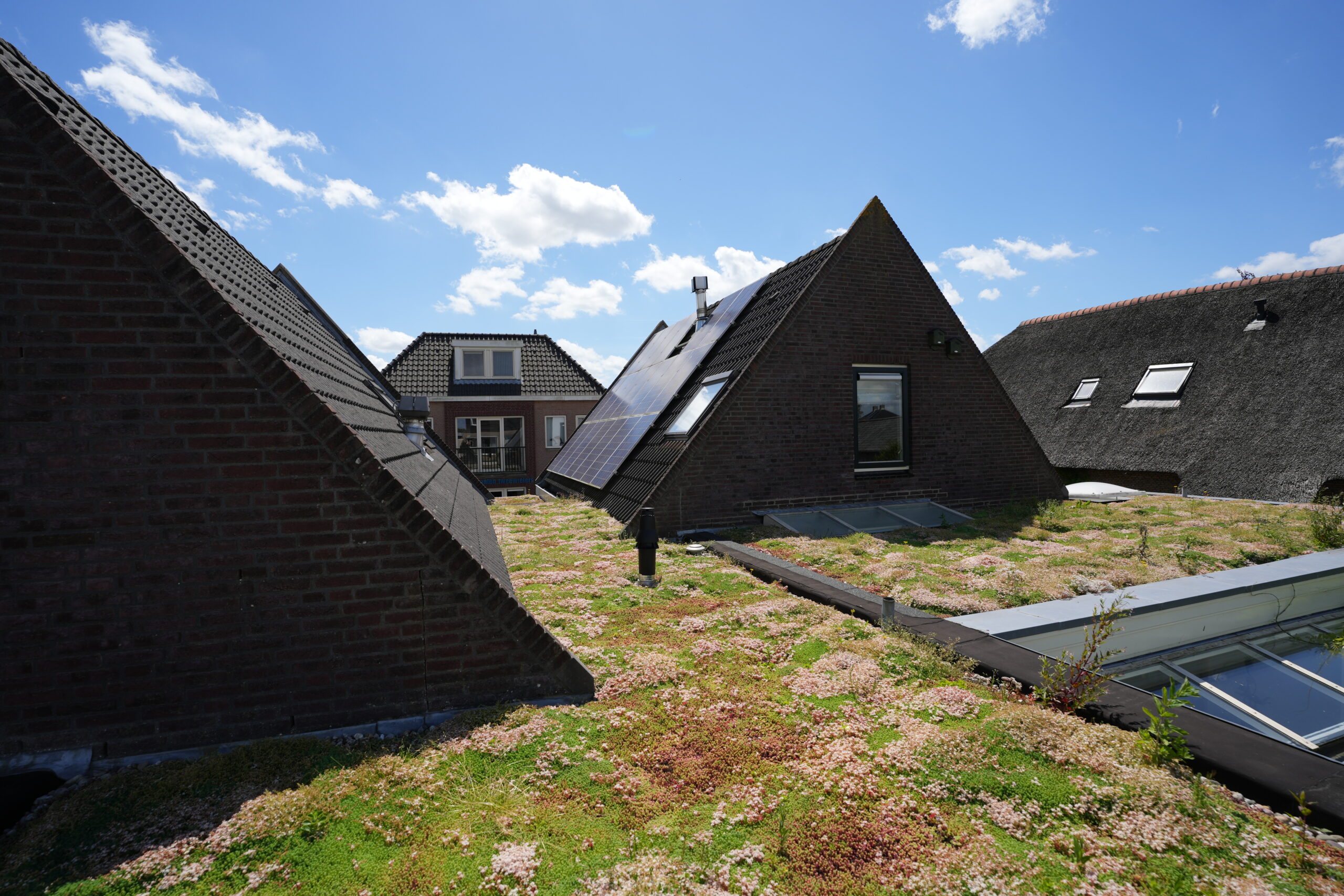
When constructing a biodiverse green roof, careful consideration is given to what function the roof can serve for species commonly found around the building. If the building has great potential as a nesting site for oystercatchers and other roof-breeding bird species, it is a good idea to create gravel or shell surfaces on the roof. As an addition, small water can also be created supplemented with shaded areas.
Unitura’s EcoHabitatRoof basically consists of the EcoRoof Cassette, supplemented by areas of gravel, shell, small water and nesting facilities. The Cassettes are placed on a protective fleece to provide additional protection for the roofing.
The EcoRoof Cassette is 95kg per m2 saturated. There is no need to weight the corners.
The water buffering capacity is about 30 liters per m2. This may qualify you for subsidies!
Most green roofs primarily serve a function for insect species. With a few additions, green roofs can also be suitable for roof-breeding bird species and sometimes even small ground-borne mammal amphibians. Roof-breeding bird species require pieces of shell or gravel, water, shaded road crawling areas and semi-open nesting boxes.
A good biodiverse green roof has something to offer for as many different animals as possible. Key components include plantings, gravel or shells, water, nesting boxes and provisions for insects.
An EcoRoof cassette is made of recycled HDPE. The technical name of this type of plastic is High-Density polyethylene. It is an incredibly resistant resin used for shopping bags, milk jugs, agricultural tubes, playground equipment, shampoo bottles, and so on. Its long polymer chains make it much stronger and thicker than PET. It can withstand relatively high temperatures and is one of the easiest polymers to recycle. Recycled HDPE is usually used for the same purposes, but is often downcycled as well.
An important municipal tool to encourage nature-inclusive construction is the point system. Municipalities require new developments to achieve a minimum number of nature-inclusive points. How many points can be obtained for which measure is laid down in a points system.
Mitigation measures are measures to prevent negative effects of activities on protected habitats or values as much as possible. They are “mitigating” measures. The first effort is always to prevent harmful effects. If prevention is not possible, then the choice is made to compensate the negative effects as much as possible.
With any new physical development, there is an opportunity to build nature-inclusively. If a building or site is seen as a habitat, then many “hook-up” opportunities for flora and fauna can be discovered in that object or surface. With relatively small interventions, buildings or areas can often be made very attractive for natural co-use.
Nature-inclusive building is a form of sustainable construction that involves building and designing in such a way that a structure contributes to local biodiversity and natural values.
The habitats of house sparrows, swifts and bat species are protected year-round. Because of this protection, no work may be done on a building in such a way as to render this residence unusable. Besides these species/species group, there are more strictly protected building-dwelling species, but the ones mentioned above are the most common.
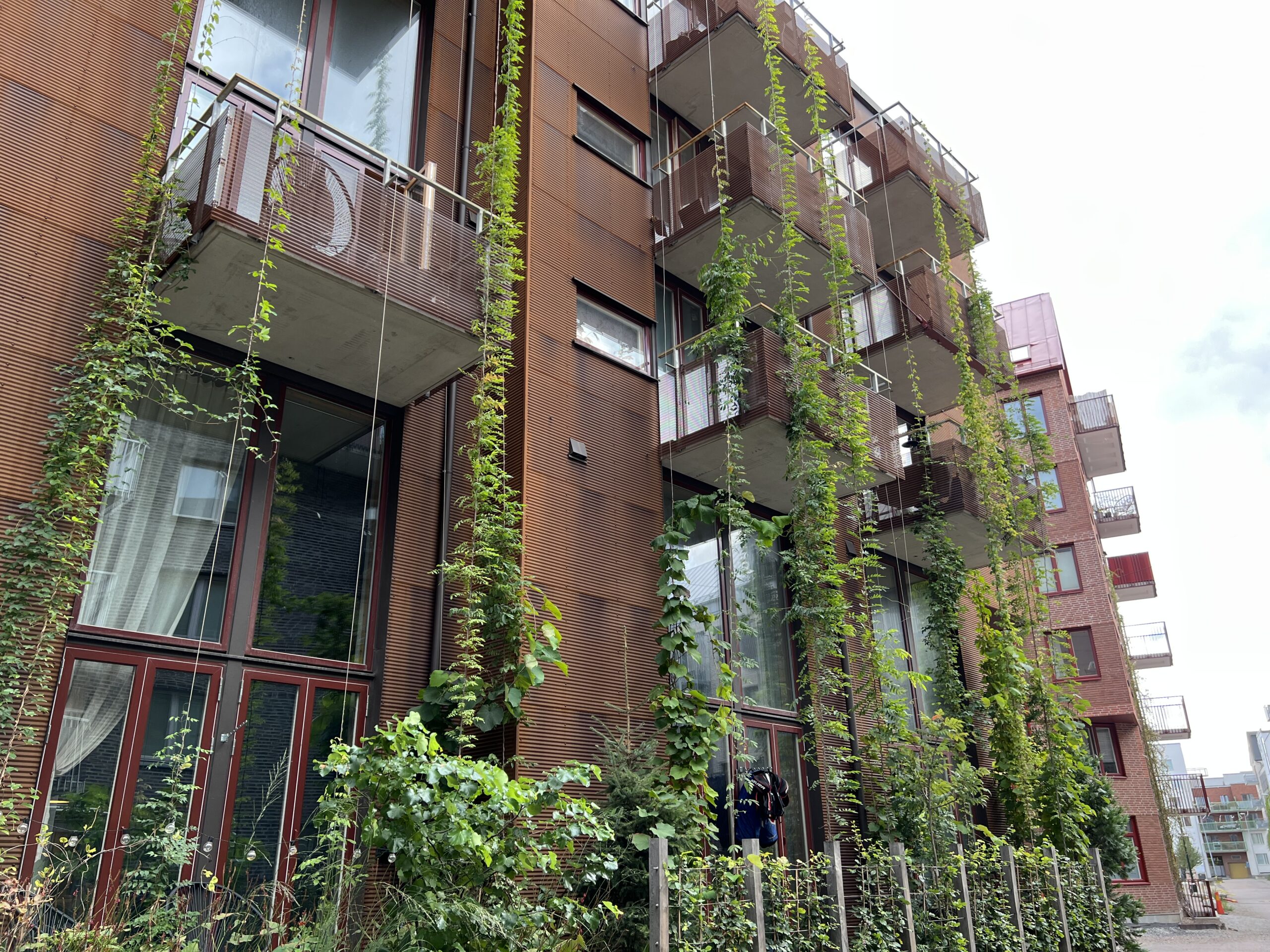
The Climbers® Stainless Steel Climbing Aid System offers several advantages, including durability, aesthetic appeal, versatility, easy installation and environmental friendliness.
The Climbers® Stainless Steel Climbing Aid System is a high-quality system designed to guide and support climbing plants as they grow upward. It consists of stainless steel components such as climbing wires, spacers, clamps, tensioners and fastening accessories.
Yes, the Climbers® Stainless Steel Climbing Aid System is made of stainless steel, which is naturally resistant to corrosion and rust. It is designed to withstand various weather conditions and prolonged exposure to the elements.
Yes, the Climbers® Stainless Steel Climbing Aid System is designed with ease of use and ease of installation in mind. The components are easy to assemble and can be adapted to different surfaces and structures.
The Climbers® Stainless Steel Climbing Aid System is suitable for a wide range of climbing plants, from the categories of winding climbers, swinging climbers and “support climbers.
No. These 8 species are known to attract many different species of bees, bumblebees, hoverflies and butterflies. By choosing 8 to 10 species, each species is well represented and that increases the likelihood that each species will produce enough seed to establish itself after flowering.
No. While exotic species may bloom beautifully, they are often not suitable as host or nectar plants for our native insects.
Warding brushes are often used to make eaves unsuitable for house sparrows. The shedding brushes are pulled into the open side of the eaves using tyraps and special gutter hooks to prevent house sparrows from still being able to get into the space between the tile and the roof sheathing.
Exclusion flaps are special devices developed to remove bats from buildings in an animal-friendly manner. Exclusion flaps are essentially one-way devices. The exclusion flap allows bats to get out, but not back into the building. Unitura’s EF1 and EF2 XL are the most commonly used exclusion flaps in the Netherlands.
There are various forms and techniques of disinhibition, but in the Netherlands the most commonly used technique is to physically close off openings that species use to enter the building. When closing the openings, special devices called exclusion flaps are installed that allow bats to leave the building but not return.
Discouragement, also known as wildlife clearance, refers to the animal-friendly removal of protected species from buildings so that work on the buildings can be done safely.
Infill foam is used to seal small openings, particularly to exclude bats. Fill foam is often used in conjunction with exclusion flaps.
Swifts are easy to lure with a bait system. For example, use decoy LK2 from Unitura. Decoy sounds are best played in the morning or late evening. Stop playing when the swifts have discovered the nest boxes or facilities. Typically, swifts start breeding the year after they discover the facilities. So don’t be alarmed if a nest is not made in the boxes right away.
Mitigation projects under the Nature Conservation Act distinguish between permanent and temporary swift boxes. Typically, temporary swift boxes are first provided in the immediate vicinity of a building being demolished or renovated. Swifts can then temporarily move to these boxes until permanent swifts become available in the new or renovated building. Typically, swift facilities can only qualify as “permanent” if they are highly durable (have the same lifespan as a building) and if they are part of the building’s architecture (the facilities should not be easily removed).
Temporary swift boxes are swift boxes intended as temporary places of refuge for swifts. Mitigation projects under the Nature Conservation Act distinguish between permanent and temporary swift boxes. Typically, temporary swift boxes are first provided in the immediate vicinity of a building being demolished or renovated. Swifts can then temporarily move to these boxes until permanent facilities become available.
Swift boxes should preferably be installed as high as possible. Preferably at least 5m high, where the swifts have a completely free approach route. Avoid trees, canopies or flagpoles that are in the way. Place swift boxes preferably on cold facades (north/east), or in the shade of a wide gutter or overhang. For a more detailed explanation, see Unitura’s Handbook .
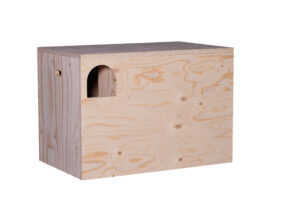
Swifts are artificial habitats specifically designed to provide swifts with a place to live in places where they do not naturally occur or are not currently present. Arcadis’ mitigation catalog and BIJ12’s knowledge documents show the physical requirements of swifts for their habitat. Examples of swift boxes include the GZT1, GZT2 and the GZP2.
Traditionally, house sparrows like to stay under roof tiles. It regularly happens that house sparrows need to find a place under the roof tiles again after a renovation. In such cases, it is important to apply grip netting (GG2) under the battens and roofing sheets to give house sparrows sufficient grip and to protect the underlying foil or roofing sheet. It is also important to use high battens and battens. Standard battens are not high enough. In addition, the use of convex roof tiles is recommended. When using bird scraps apply them behind the third tile.
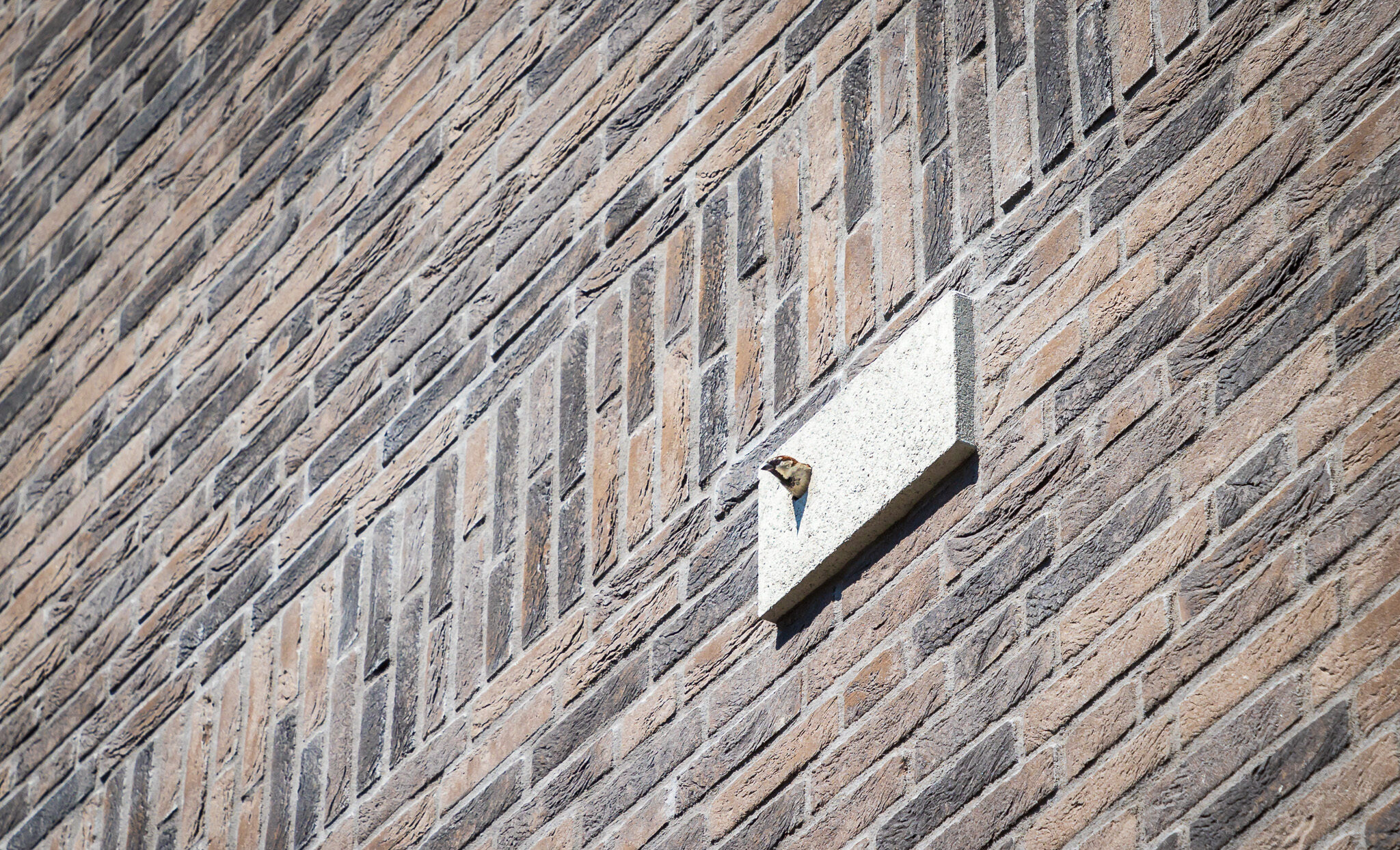
Double house sparrow boxes are specifically designed to compensate for the legal mitigation target of two residences per nest site encountered at one time. Thus, double house sparrow boxes are primarily a practical addition. The HMT2 is a double house sparrow box.
House sparrow boxes are best placed between 3m and 12m high. Whereby positions at the height of the eaves (about 6m) are most preferred. Position house sparrows preferably on cold facades (north/east). Make sure there is enough space under the nest box. House sparrow boxes work best if there is greenery near the box (within 10m). For a more detailed explanation, see Unitura’s Handbook .
Mitigation projects under the Nature Conservation Act distinguish between permanent and temporary house sparrow boxes. Usually, temporary house sparrow boxes are first offered in the immediate vicinity of a building that is being demolished or renovated. House sparrows can then temporarily move to these hives until permanent house sparrow hives become available in the new or renovated building. Typically, house sparrow boxes can only be considered “permanent” if they are very durable (have the same lifespan as a building) and if they are part of the building’s architecture (the boxes should not be easily removed).
Temporary house sparrow boxes are house sparrow boxes intended as a temporary refuge for house sparrows. Mitigation projects under the Nature Conservation Act distinguish between permanent and temporary house sparrow boxes. Usually, temporary house sparrow boxes are first offered in the immediate vicinity of a building that is being demolished or renovated. House sparrows can then temporarily move to these boxes until the permanent house sparrow boxes become available.
House sparrows’ stilts can be very effective as habitat for house sparrows. House sparrows are most effective in locations with few nesting opportunities for house sparrows and where house sparrow boxes cannot be used. Examples of such situations are barnyards or gas stations or other more isolated locations. Examples of house sparrow mills include the HMT3 and the HMPT1.
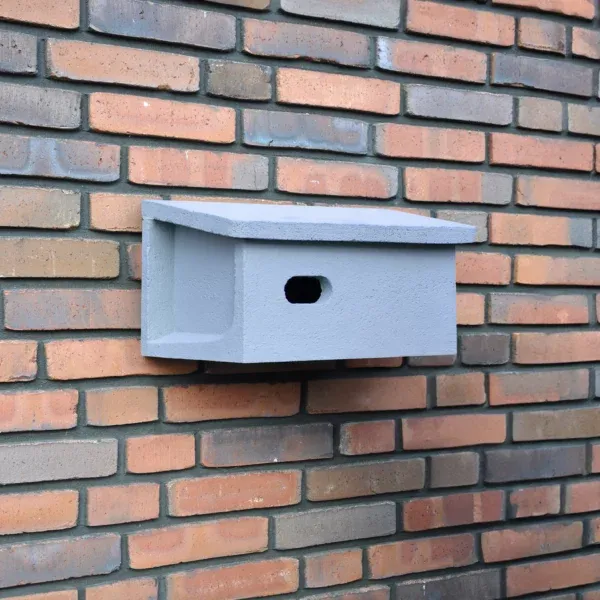
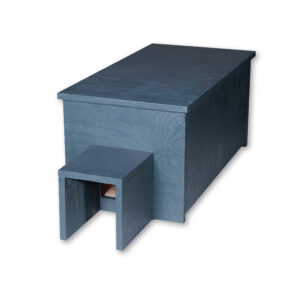
House sparrow boxes are artificial habitats specially designed to provide house sparrows with a place to stay in places where they do not naturally occur. Arcadis’ mitigation catalog and BIJ12’s knowledge documents show the physical requirements that house sparrows have for their habitat. Examples of house sparrow boxes include the HMT1 and the HMP2.
Mitigation projects under the Nature Conservation Act distinguish between permanent and temporary bat boxes. Typically, temporary bat boxes are first provided in the immediate vicinity of a building being demolished or renovated. Bats can then temporarily move to these boxes until permanent bat boxes in the new or renovated building become available. Typically, bat boxes can only be considered “permanent” if they are highly durable (have the same lifespan as a building) and if they are part of the building’s architecture (the boxes should not be easily removed).
Spherical bat boxes is a designation of all bat boxes designed specifically for bat species that reside in tree cavities. Tree cavities typically have a convex interior space. The convex bat boxes provide a similar convex space. Typical species associated with this type of cabinets are red-eared bats and big-eared bats.
The term summer roost is a collective term for all bat roosts that cannot be designated as pair roost, maternity roost or (mass) winter roost. Small or large bat boxes can be used as a replacement for this type of habitat. VMT1 and VMPM1, among others, are suitable.
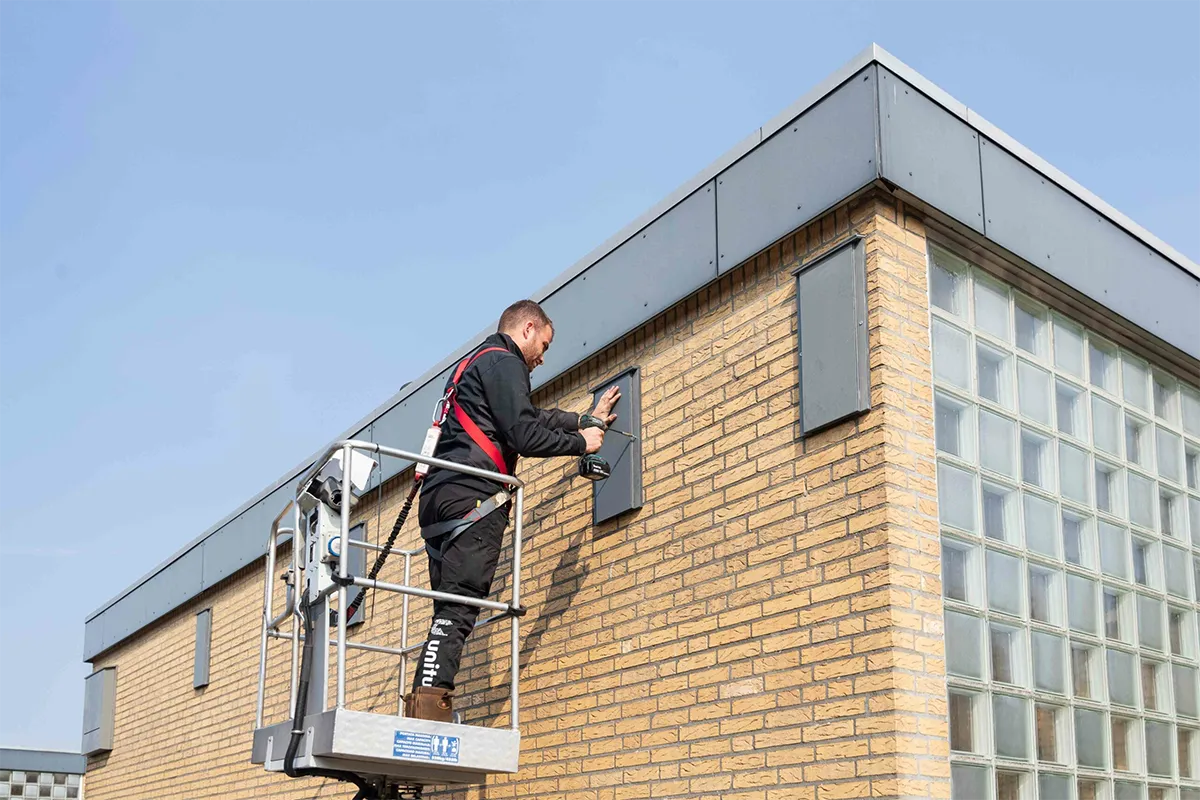
Scale boxes are bat boxes designed for mounting on buildings. It is a collective term for all bat boxes without a back or approach board. The cabinets have a U-shaped profile with only a front plate on top. Bats crawl between the wall and the box, so to speak.
In winter, many building-dwelling bat species reside in large groups in buildings with stable temperatures just above freezing. These habitats are called mass winter quarters. It is difficult to provide prefabricated solutions for these complex habitats. The cabinet VMPW1 is the first prefabricated bat cabinet designed specifically for mass wintering roosts of the common dwarf bat.
Flat bat boxes is a designation for all bat boxes designed specifically for crevice-dwelling bats. Common dwarf bats, moulted dwarf bats and late kites, among others, are typical bat species that like to reside in very narrow spaces. Flat bat boxes provide this very narrow space in the form of gaps of between 15 and 35mm.
The term small bat boxes comes from BIJ12’s knowledge document Common Dwarf Bat. This designation refers to bat boxes suitable for up to 10 bats. Examples of these boxes include the VMT1, the VMT1a, the VMTH1, the VMPM1 and the VMPM1e.
In summer, large groups of female bats stay in colony form to raise young as a group. Bats make high demands on these maternity roosts. The roosts must have stable high temperatures, because the young bats are not yet capable of keeping themselves warm. To provide adequate space for the colony, large, multi-level bat boxes are needed. Examples of maternity boxes include the VMT3, the VMT3a and the VMPMK1.
In late summer and fall, male bats occupy so-called mating roosts. Male bats lure female bats inside with special courtship calls to mate. In most bat species, male bats are territorial during this period. Small or large bat boxes can be used as a replacement for this type of roost. VMT1 and VMPM1, among others, are suitable.
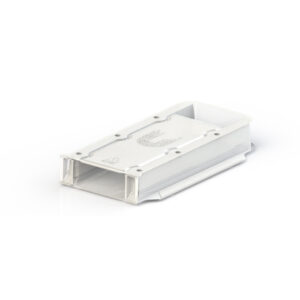
The Unitura bat sensor is applicable to all Unitura bat facilities except the VMT2(a), VMT3(a), VMPT1. The entrance opening of these facilities will need to be modified with a non-conductive material for functional operation. Furthermore, it is not possible to mount the detection strip on entrance openings smaller than 16.5 cm, such as the VMP3.
The battery of the Unitura bat sensor lasts for two years.
The Unitura bat sensor is at 85% accuracy at detecting bats.
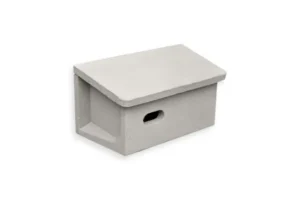
Bat boxes are artificial enclosures designed specifically to provide habitat for bats where they do not naturally occur. Each bat species has its own physical requirements for a bat box. Arcadis’ mitigation catalog and BIJ12’s knowledge documents show these physical requirements.
Maternity boxes are designed to house maternity colonies of bats. During the summer, large groups of female bats reside in colony form to raise young as a group. To provide adequate colony space, large, multi-level bat boxes are needed. Maternity boxes are best placed in a sunny position. Examples of maternity boxes include the VMT3, the VMT3a and the VMPMK1.
Temporary bat boxes are bat boxes intended to serve as temporary places of refuge for bats. Mitigation projects under the Nature Conservation Act distinguish between permanent and temporary bat boxes. Typically, temporary bat boxes are first offered in the immediate vicinity of a building being demolished or renovated. Bats can then temporarily move to these boxes until permanent bat boxes become available.
Bat mute lifts or rocket boxes are actually bat boxes on a pole. Typically, bat muteillen are used only when there are no suitable buildings or suitable trees to hang standard bat boxes from. Bat tube lifts fall into the category of permanent bat facilities. Depending on the authority having jurisdiction, one loft may be used to compensate for one summer roost or pair roost of the common or rough legged bat.
Bats use a network of roosts at different orientations. Therefore, bat boxes are best distributed among as many different orientations and locations as possible. Bats look for roosts along corners and edges. Place bat boxes on buildings as much as possible along eaves and ledges. The basic maxim is that bat boxes should always be placed as high as possible, but at least 3m high. Make sure there is free space under the box. For a more detailed explanation, see Unitura’s Handbook .
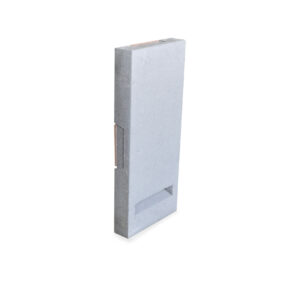
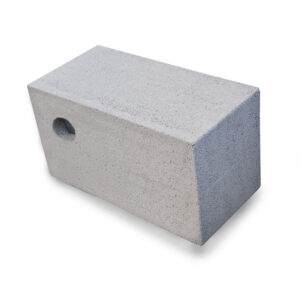
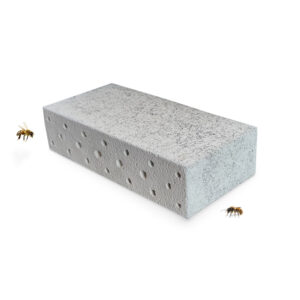
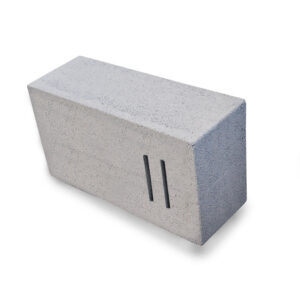
Built-in bat boxes are nesting bricks made of wood concrete that can be incorporated into masonry. Examples of these bat boxes include the VMPM1 and the VMPM1e.
The term large bat boxes comes from BIJ12’s knowledge document Common Dwarf Bat. This designation refers to bat boxes suitable for more than 10 bats. Examples of these boxes include the VMT2, the VMT2a and the VMPMG1.

 >
> >
> >
> >
> >
> >
> >
> >
> >
>