 EN
▾
EN
▾
EN
▾
EN
▾
Kingfishers dig their nest holes in steep, unvegetated banks or solid root balls along the water’s edge. In many landscapes, such natural nesting sites have become scarce, in part due to human intervention in water resources. This creates areas where there is plenty of food but no suitable nesting sites. Installing a kingfisher wall as a nesting site can remedy this problem.
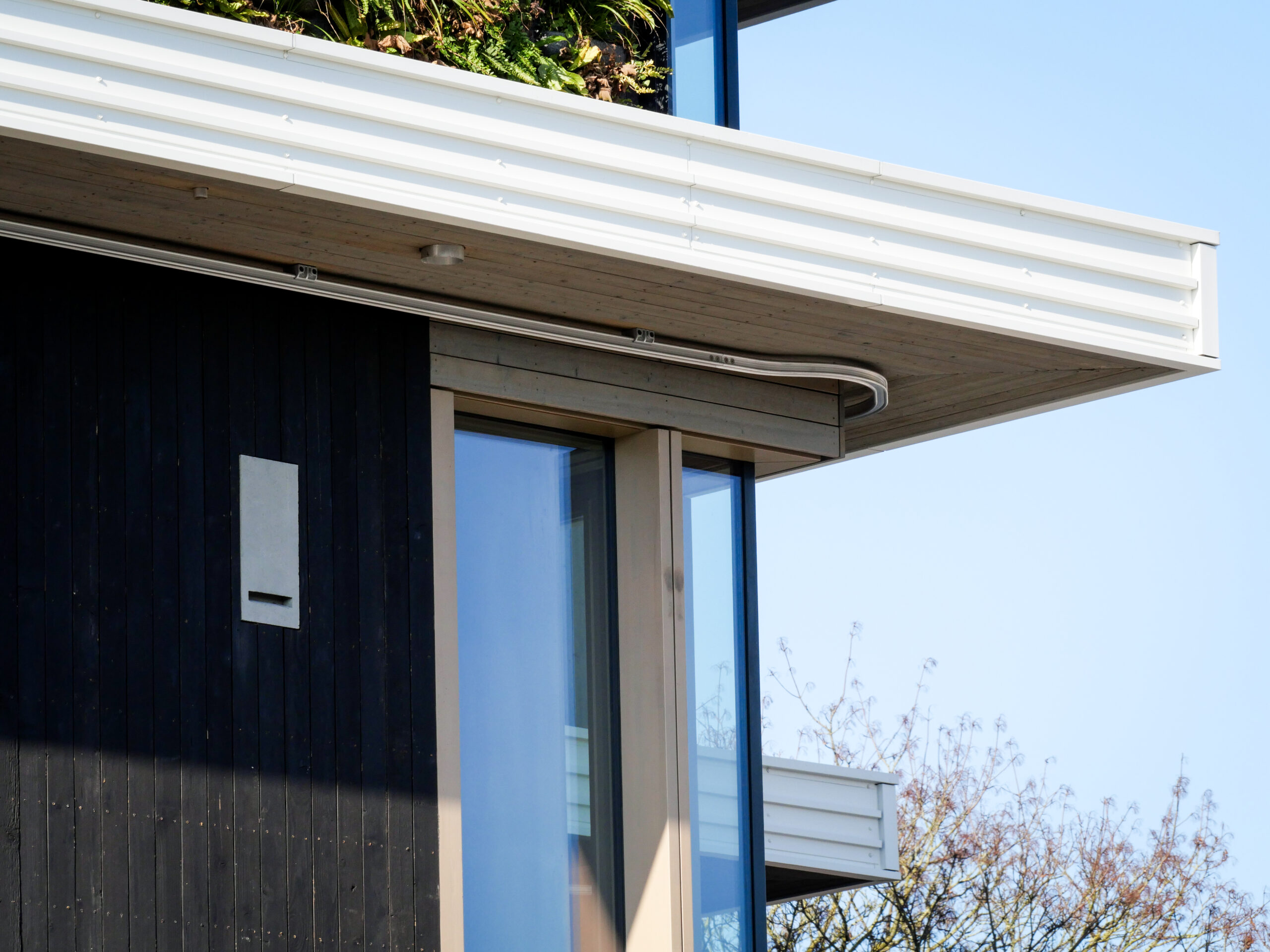
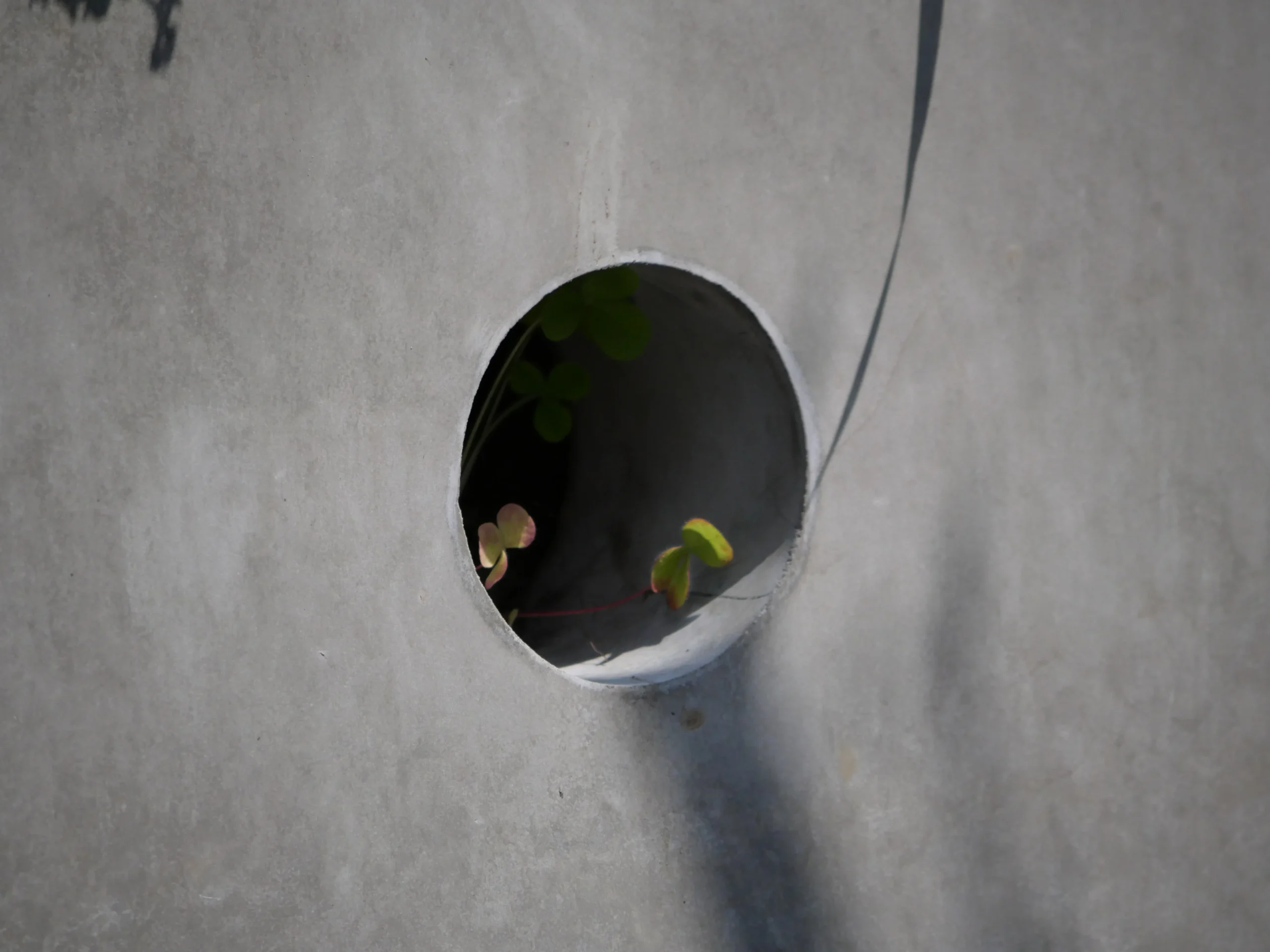
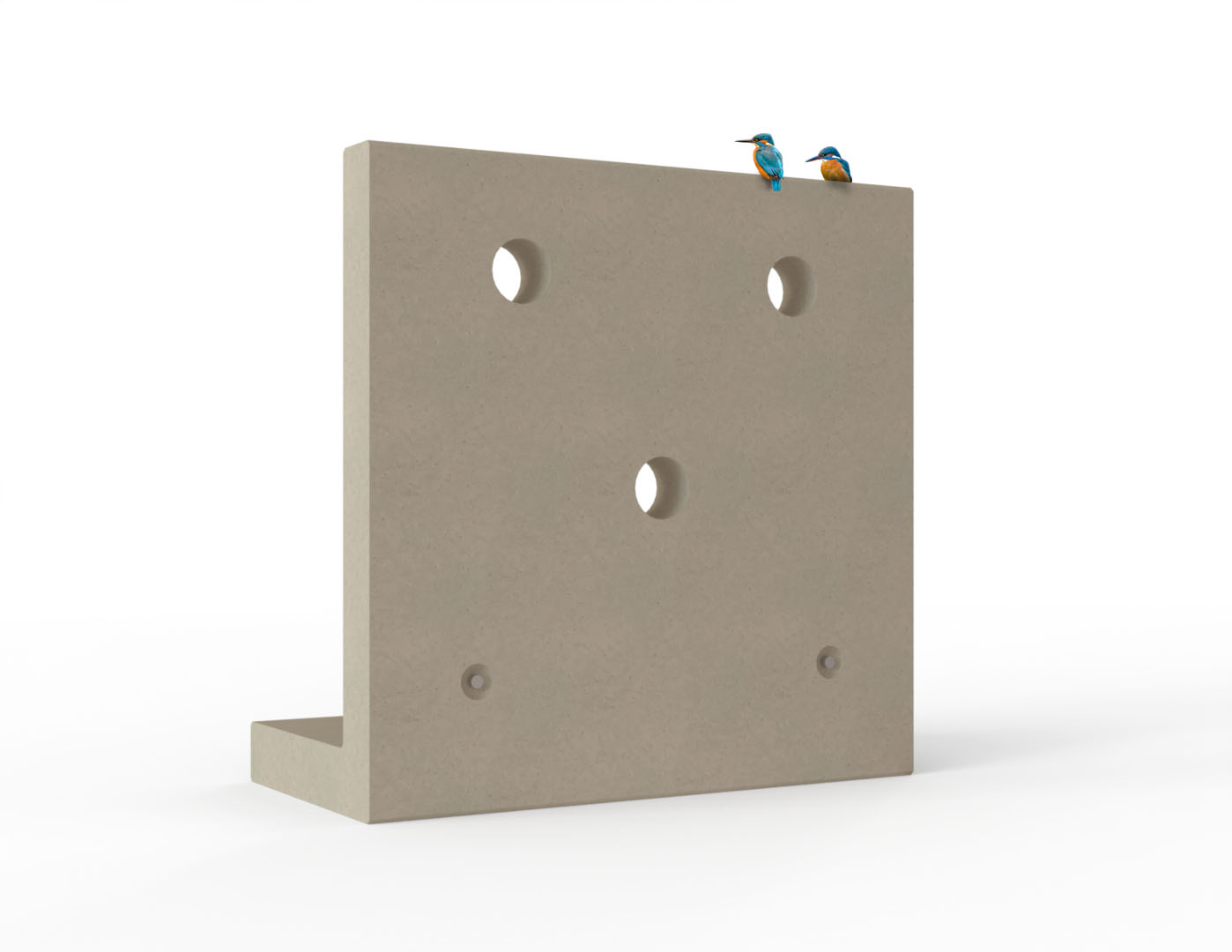
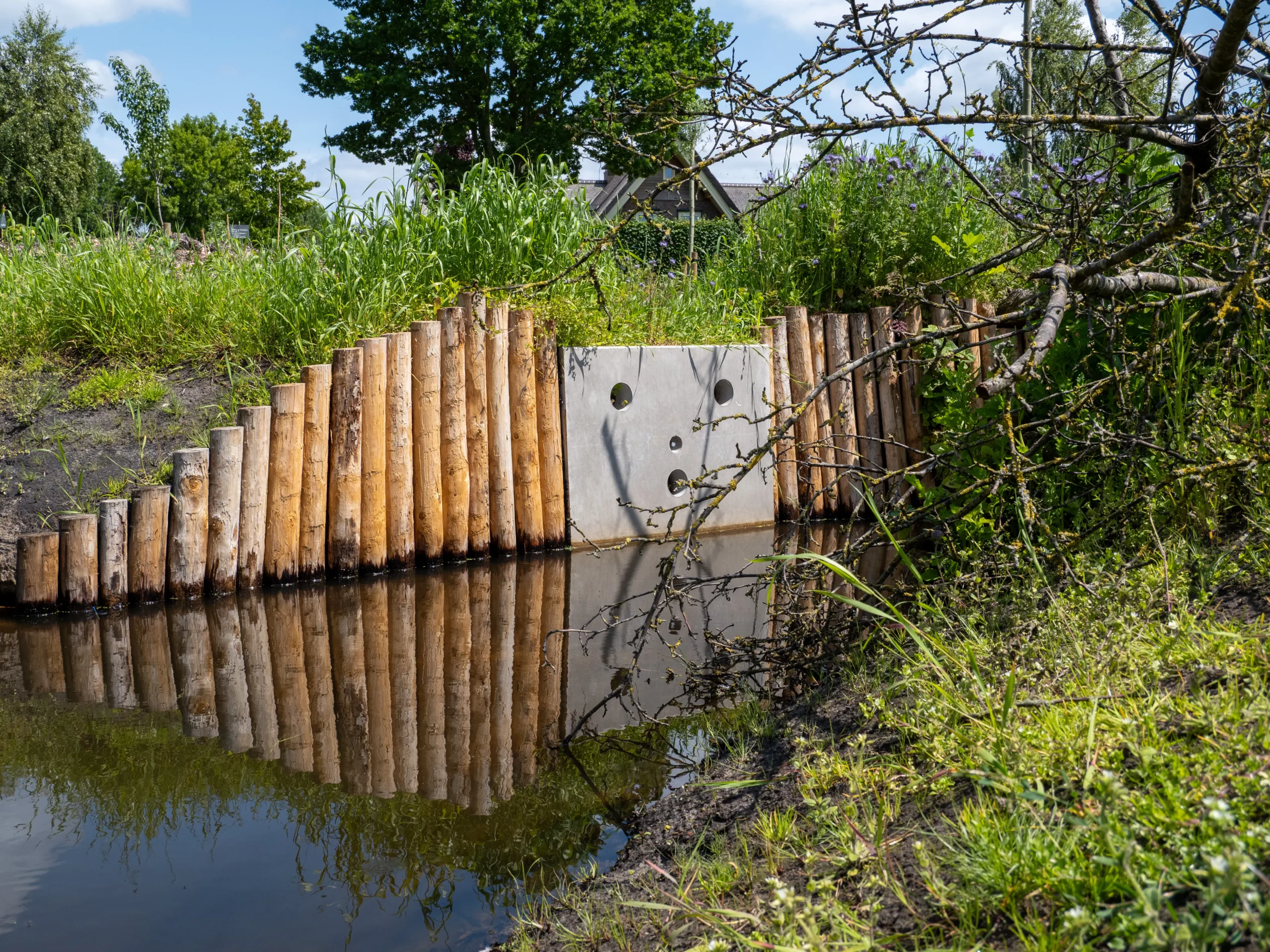
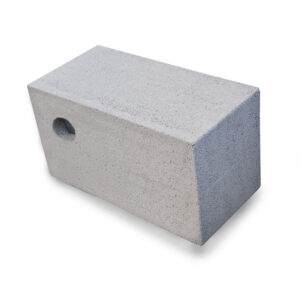
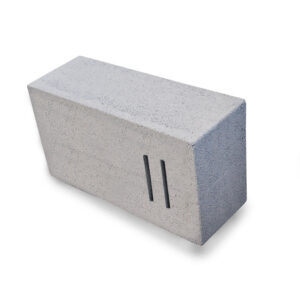
Our concrete kingfisher wall is designed as an artificial nesting site that meets the natural preferences of the kingfisher. With three carefully placed nesting holes, the wall provides a stable, safe nesting site and prevents collapse of the nest corridors, one of the risks associated with natural banks.
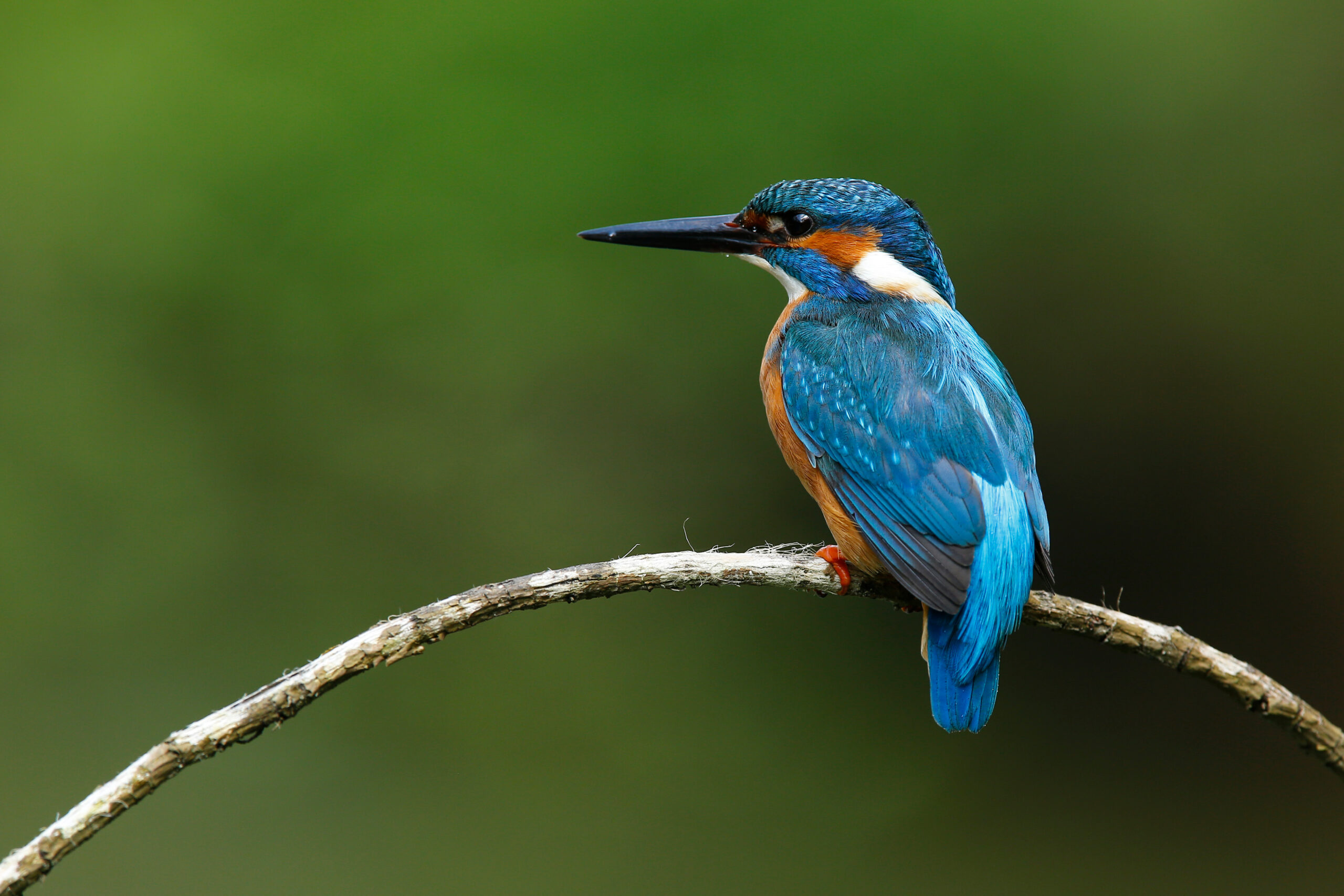
The kingfisher (Alcedo atthis) is a compact, stocky bird with a body length of 16-17.5 cm, a wingspan of 23-24 cm and a weight ranging between 35 and 55 grams. The species is distributed throughout almost all of Europe, with the exception of Iceland, and is strongly tied to clear, fish-rich waters. Both slow-flowing streams and rivers and stagnant waters may be suitable, provided there is adequate transparency, stable fish habitat and steep, erosion-prone bank walls. Such riparian structures in wooded or semi-open landscapes are essential for nesting habitat.
Its diet consists mainly of small fish species about 3-6 cm in length, supplemented by aquatic macrofauna. The species hunts from a fixed perch, foraging visually. After a steep thrust dive, prey is smashed against a hard surface above ground to achieve immobilization before being swallowed longitudinally.
The breeding season typically runs from late March through August, with several clutches per season possible under favorable conditions. Kingfishers dig nest tunnels in steep bank walls or uprooted tree clumps; these tunnels can be up to about one meter deep and end in a nest chamber without nesting material. A clutch usually includes 4-8 eggs with an incubation period of 18-21 days. Both parent birds participate in brood care. The fledging period is between 22 and 28 days after hatching. Although occasional ages up to 21 years have been recorded, average life expectancy in the wild is around 7 years, heavily influenced by winter mortality and habitat quality.
The location of a kingfisher wall is critical to its use as a nesting site. The wall should be placed near clear, fish-rich water and in a quiet environment without frequent disturbance from people or predators.
In addition, some environmental factors are important:
Installation outside the breeding season (September-February) is recommended to minimize disturbance. If necessary, pre-drilled nest passages about 30 cm deep can expedite the wall’s commissioning.
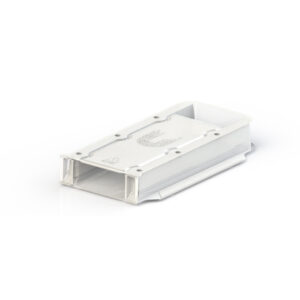
Our L-shaped kingfisher wall is an ideal solution to provide a safe and functional nesting site for these species. The wall is made of concrete and features three carefully placed nesting holes that meet the needs of kingfishers.
Kingfishers depend on suitable nesting sites, such as steep, bare banks or firm root balls. With this nesting wall, we create an artificial bank that perfectly matches their natural preferences.
A kingfisher wall requires annual maintenance to remain optimally functional. In January or February, the wall should be checked for overgrowth and possible collapse. Mosses and plants that attach to the wall should be carefully removed, as overgrowth hinders the digging of nest holes for kingfishers. In addition, monitoring is important:
Check for vomit residue and scales around the nest opening.



 >
> >
> >
> >
> >
> >
> >
> >
> >
>